






















IndoPsyCare Treatments
Cognitive Behavioural Therapy for Body Dysmorphic Disorder
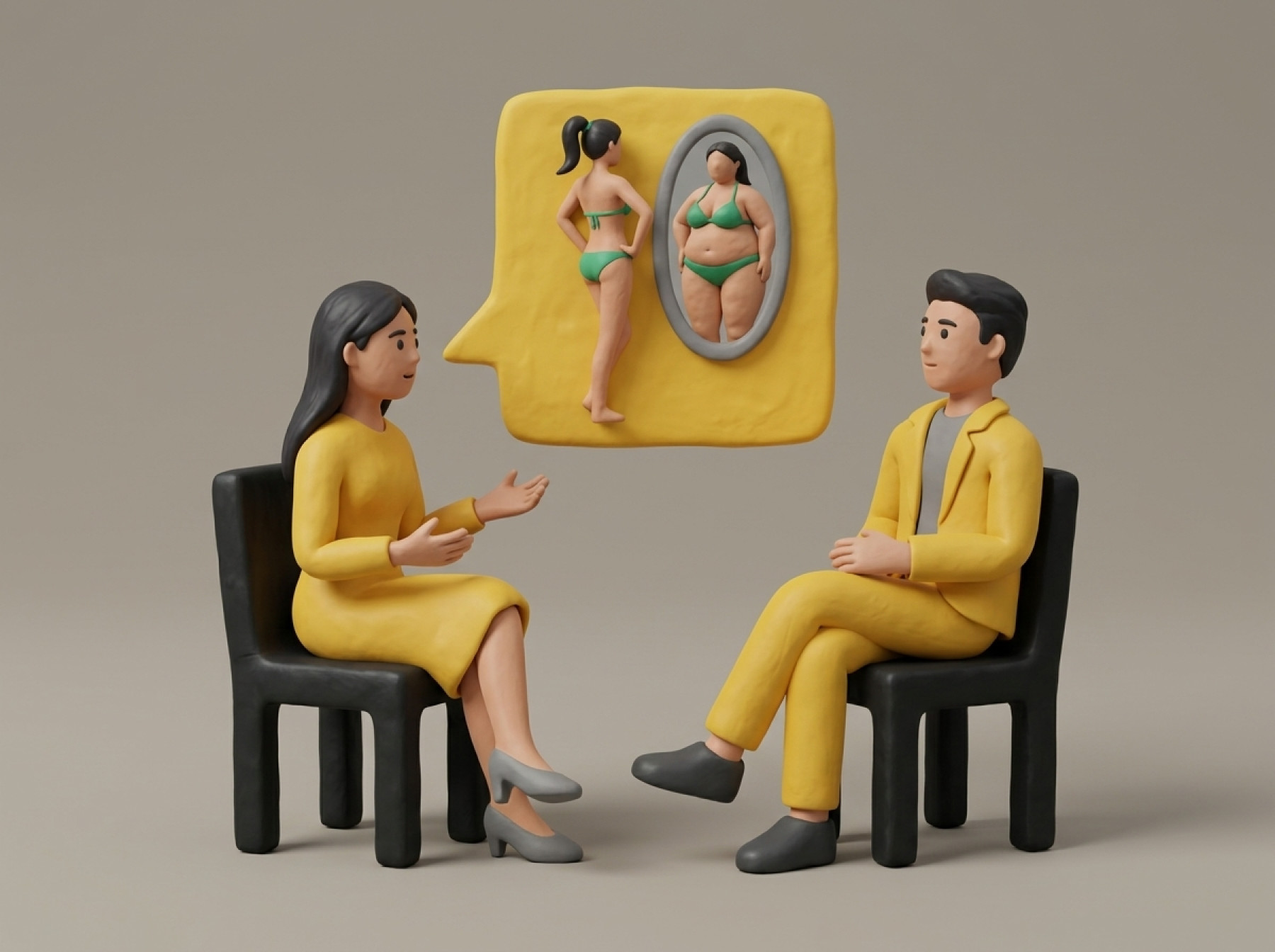
A Quick Refresher

What is Body Dysmorphic Disorder?
Body dysmorphic disorder is a condition that involves an extreme preoccupation with one’s own perceived defects in physical appearance. Often, these "flaws" are minor and go unnoticed by others. Nevertheless, to reduce the distress associated with the features, individuals may engage in the enactment of repetitive behaviours, including:- Mirror checking: Individuals consistently check their reflection and fixate upon certain parts of their appearance
- Excessive grooming: To mask their insecurities, individuals may wear makeup to the gym, or thick foundation to the corner shop
- Skin picking: Individuals may pull at their lips, fingertips, cheeks, or loose skin
- Reassurance seeking: Individuals may feel the need to have their self-worth affirmed and reaffirmed by external parties such as their friends or significant others
- Physical comparisons: Individuals may find themselves comparing their appearance to people in real life and social media models
- Parts of the face
- Hair
- Skin
- Breast size
- Muscle size
- Genitalia
Symptoms of Body Dysmorphic Disorder
For a comprehensive list of body dysmorphic disorder symptomatology, we recommend you visit the ICD-11 webpage.Theoretical Basis

Cognitive Behavioural Theory of Body Dysmorphic Disorder
In the following section, we describe the cognitive behavioural model of body dysmorphic disorder proposed by Fang and Wilhelm (2015). The model rests on the premise that everyone occasionally endures negative thoughts regarding their appearance. The difference between these individuals, and individuals with body dysmorphic disorder, however, lies in the way that these thoughts are processed and responded to. Those with body dysmorphic disorder place significant importance on appearance and consequently attach much value and weight to negative thoughts regarding their self-image. These individuals process these negative perceptions in a biased manner, allocating much of their attention to certain parts of their appearance as opposed to processing their physique holistically. Maladaptive thoughts and beliefs may include:- My hair looks terrible therefore, I will always be alone
- I have acne, everyone will think I’m ugly
- My skin is imperfect, no one will ever want to be my friend
- Sensitivity to rejection
- Fear of negative evaluation
- Childhood experiences
- Cultural values
Tailored Treatment Plans

Dear Reader,
At IndoPsyCare, we formulate treatment plans on a case-by-case basis. Contingent upon your condition and situation, your therapeutic journey may or may not include a variation of the following components:Assessments
Your therapist may administer assessments at various points throughout your therapeutic journey. This is done as a way of assessing your improvements and thus the effectiveness of the treatment plan. When treating body dysmorphic disorder, our clinicians typically administer several assessments including The Body Dysmorphic Disorder Questionnaire (BDD-Q) and the Yale-Brown OCD Scale adapted for Body Dysmorphic Disorder (BDD-YBOCS). Nevertheless, we ask that you please keep in mind that assessments may vary depending upon your specific condition.Psychoeducation
Your therapist will seek to increase your understanding of social, cultural, biological, and psychological mechanisms that underlie and maintain body dysmorphic disorder. In addition, you may be taught to distinguish between "body image" and "physical appearance."Cognitive Restructuring
During this phase, your therapist may help you identify and evaluate your negative appearance-related thoughts, perceptions and beliefs. Further, our clinicians may help you identify possible cognitive errors that underpin and perpetuate their maintenance. For instance, if you believe 'the stranger on the street looked at me distastefully because I am ugly', your therapist can help you identify the cognitive distortion that maintains this thought process (for instance, mind-reading: you don’t actually know what the person is thinking, or whether or not their expression had anything to do with you at all). During this stage, your therapist may also assist you in your ability to generate less harmful alternative explanations for your beliefs. For instance, your therapist can aid your ability to recognize that an individual's negative expression that you may have perceived as directed at you may have had nothing to do with you and more to do with their own life circumstances. For instance, perhaps they were simply having a bad day and were lost in their own thoughts when they unintentionally looked in your direction. Your therapist can assist you in your ability to find evidence, either in favour of or against, different alternative explanations.Exposure and Response (Ritual) Prevention
Your clinician can assist you in your ability to become engaged in situations that would typically induce distress and maladaptive responses. Exposure and Response Prevention are usually combined to help reduce or eliminate your rituals. This may involve "graded tasks"; specifically, behaviours are incorporated hierarchically from the least distressing to the most distressing. For instance, your therapist may ask you to go out and buy groceries with no makeup on and ask that you do not repeatedly check your appearance. Next, they may ask that you attempt this at a breakfast event with your friends. The realization will likely become apparent that neither strangers on the street, nor any member of your friend group share your negative views about your perceived imperfections. In most cases, they will go completely unnoticed.Mindfulness and Perceptual Retraining
Your therapist can guide you in the redirection of your attention and help you reappraise your physical appearance in a neutral, non-judgmental and holistic manner. For instance, you might be asked to describe yourself in neutral terms, for example, "I have black hair", "I have tan skin", and "I have brown eyes". In most cases, this phase involves the use of a mirror. Mirror training intends to "fix" your relationship with your reflection and develop control over your checking behaviours. Furthermore, during this stage, your therapist may aid you in retraining your attention. For instance, when you speak to people, your therapist may teach you techniques that will help you turn your attention outwards, as opposed to focusing on yourself and your perceived flaws. For example, instead of worrying “what do they think of my hair today? They must notice my imperfections”, you will gradually develop the ability to focus on the content of the conversation.Addressing and altering maladaptive core beliefs
In combination, the phases involved in cognitive behavioural therapy can aid you in re-evaluating your views and core beliefs regarding your appearance.Optional modules for specific issues
IndoPsyCare offers optional modules for specific issues. For instance, if you engage in skin-picking, your therapist may provide a habit-reversal module. If you suffer from depression, your therapist might integrate behavioural activation.Relapse Prevention
During this phase, your therapist will reinforce your understanding of the strategies you have learned, including when and how they should be implemented. Furthermore, your therapist will typically teach you to recognize your own personal warning signs. It is essential that you understand these warnings so you can seek timely assistance from your therapist who will re-address your recovery treatment plan.Treatment Duration

How many sessions will I need?
Our psychologists base your treatment plan upon scientific literature and recommendations from bodies such as the Cochrane Library, the UK’s National Institute of Health and Care Excellence (NICE) and IPK Indonesia’s National Clinical Practice Guidelines. Whilst we generally recommend 16-24 weekly sessions, the number of sessions you require is typically influenced by:- The severity of your symptoms
- Existing comorbidities (co-existing conditions)
- The length of time you have been experiencing your condition
- Your personal motivation and progress
- Your social support network
Making the Most of Therapy


